
As per the latest reports, India’s freight logistics segment employs 95 lakh people and needs 43 lakh more by 2030, according to a skill gap study by the Logistics Sector Skill Council (LSC) and the Confederation of Indian Industry (CII). LSC Chairman Cyrus Guzder, who is also Chairman and Managing Director of AFL Private Ltd, and LSC CEO Ravikanth Yamarthy discussed the findings with The Hindu BusinessLine. The study covered 12 sub-sectors, including warehousing. LSC trains warehouse assistants, truck drivers, courier staff and forklift operators.
This matters because the skills warehouse employers need are shifting. Nearly half of LSC’s courses now focus on artificial intelligence (AI) or include a large AI component, while government funding for logistics skilling is about ₹50 crore a year. Quick commerce firms Swiggy, Zomato and Zepto are already recruiting trained candidates.
If expert opinion is to be believed, ₹50 crore a year is small against a gap of 43 lakh workers, so employers will have to pay for most of the training themselves. Guzder urged companies to outsource entry level training and pointed to the apprenticeship model in Germany, which has far wider reach than in India. Quick commerce platforms and large 3PL (third party logistics) firms with training budgets gain, while small warehouse operators lose trained staff to them. Coverage misses wage data, and pay decides whether trained workers stay as much as certificates do. We predict, with medium confidence, that at least one large 3PL or quick commerce firm will announce a formal apprenticeship tie up with LSC before 31 March 2027.
This development is significant for anyone who runs a warehouse and struggles to keep forklift operators or pickers. This week, check which LSC certified courses cover your roles and ask your nearest training partner for batch dates. List the tasks in your warehouse where staff now need basic AI or software skills.
Sources: The Hindu BusinessLine, 2 November 2026, Staffing third-party logistics
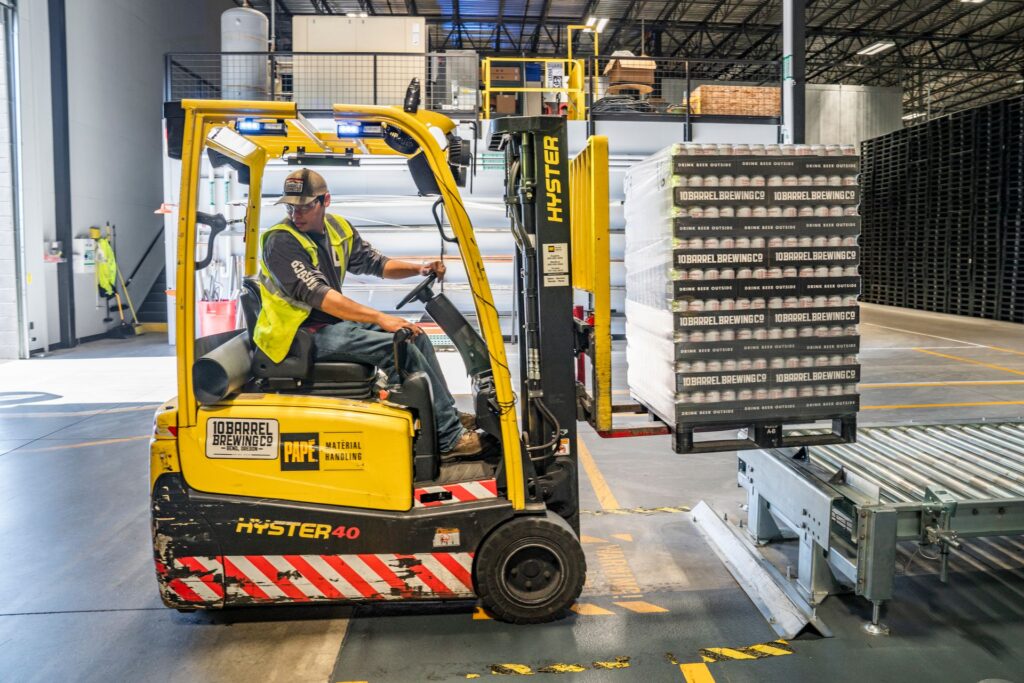
Image used just for representational purposes. It may, or may not, have any relevance to the story.